Matthew Pooley, Vulcan Issue 52, and the Strange Afterlife of the Early-2000s Editorial Cover Model
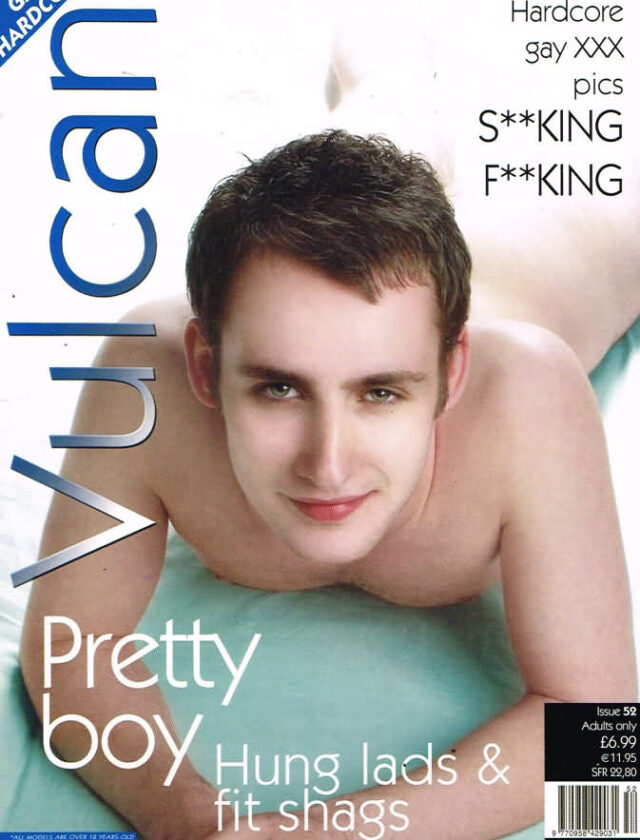

There are certain magazine covers that do more than advertise an issue. They become fragments of a moment—visual time capsules carrying the mood of a city, a subculture, a publishing era, and a specific kind of beauty that once felt unmistakably contemporary. For collectors of LGBTQ+ print history, adult-oriented editorial photography, and early-2000s British magazine culture, the name Matthew Pooley is often discussed in connection with Vulcan Issue 52, sometimes described by collectors as the “pretty boy” issue, associated with the London scene and dated around 2003, with circulation or availability extending into 2004.
This is not merely a story about a cover model. It is a story about image-making, desire, queer visibility, niche publishing, and the complicated legacy of adult magazines before the internet fully swallowed print culture whole. The early 2000s were a transitional period: glossy magazines still mattered, physical covers still created anticipation, and editorial models could become quietly iconic within particular communities without ever becoming mainstream celebrities.
Today, searches for terms such as “Matthew Pooley Vulcan cover model,” “Vulcan Issue 52,” “gay editorial model London UK 2003,” or “Vulcan magazine available to purchase” reflect more than curiosity. They reveal a collector’s impulse: the desire to locate, preserve, and understand an artifact from a distinctive period in queer visual culture.
Below, we explore the subject from five angles: the cultural context, the editorial model phenomenon, the place of adult gay print media, the collector market, and practical advice for researching or purchasing rare issues responsibly.
The Early-2000s London Moment: Print, Queer Style, and Visual Identity
To understand the lasting intrigue around Matthew Pooley and Vulcan Issue 52, one must first understand the atmosphere of London in the early 2000s. This was a city vibrating with overlapping cultural currents: club culture, fashion photography, indie music, queer nightlife, and a media landscape that still relied heavily on magazines as tastemakers.
Before Instagram feeds, OnlyFans profiles, TikTok edits, and algorithmic fame, magazines served as portals. A cover could define a look. A model’s pose, styling, haircut, facial expression, and body language carried meanings that audiences learned to decode. In gay male publishing especially, covers often blended aspiration, sensuality, rebellion, and fantasy.
The so-called “pretty boy” aesthetic—youthful, polished, photogenic, sometimes androgynous, sometimes sharply masculine—was especially visible during this time. It existed somewhere between fashion editorial, nightlife flyer art, fitness culture, and adult entertainment. Models could appear approachable yet distant, commercial yet alternative, innocent yet self-aware.
London’s LGBTQ+ scene was also central to this image economy. Soho, Vauxhall, Camden, and East London all contributed different visual languages. Gay magazines did not simply document that world; they helped construct it. They told readers what was stylish, desirable, provocative, and worth remembering.
In that context, a cover model such as Matthew Pooley was not simply a face on a page. He represented a particular editorial fantasy: London youth, queer-coded beauty, confidence, and the glossy confidence of pre-social-media print culture.
Matthew Pooley as Editorial Model: The Power of the Cover Image
The phrase “editorial model” matters. It separates a magazine image from a casual photograph or purely commercial advertisement. Editorial modeling depends on storytelling. The model is not just presenting clothing, physique, or beauty; he is helping create a mood.
A strong editorial cover image must perform several tasks at once. It has to stop the viewer. It has to communicate the magazine’s identity. It has to hint at the content inside. And, especially in adult or gay men’s magazines, it has to balance desire with branding. The most memorable covers are rarely the most explicit. They are the ones that suggest a whole atmosphere.
This may help explain why collectors continue to search for Matthew Pooley Vulcan Issue 52 years later. A cover model can become memorable because of the combination of timing, presentation, and scarcity. Perhaps the styling captured the era perfectly. Perhaps the model’s look aligned with the “pretty boy” ideal of that moment. Perhaps the issue became difficult to find, making the image more desirable over time.
In niche print culture, fame works differently. A person may not become widely known to the general public, yet within a specific collecting community, their appearance can become a reference point. The model’s name becomes attached to an issue, and the issue becomes attached to a period. Together, they form a collectible identity.
For those researching Matthew Pooley, it is important to approach the subject with care. Not every model from adult-oriented or nude editorial work has maintained a public profile. Some may have moved away from modeling entirely. Others may prefer privacy. Collectors and bloggers should avoid treating models as frozen artifacts. The image is public if published, but the person remains a person.
Vulcan Issue 52 and Gay Adult Print Culture Before the Digital Shift
The mention of pornographic, nude, and gay content places Vulcan Issue 52 within the broader tradition of adult LGBTQ+ print publishing. Yet adult gay magazines were never only about explicit content. They were also about community, coded identity, design, fantasy, and market survival.
For decades, gay adult magazines occupied a complicated cultural position. They were erotic publications, yes, but they also offered visibility at times when mainstream representation was limited or sanitized. They created spaces where gay male desire was centered rather than hidden. Their pages reflected changing ideals of masculinity, body image, grooming, fashion, and sexual identity.
By 2003 and 2004, however, the market was changing rapidly. Broadband internet was expanding. Online adult content was becoming easier to access. Print magazines had to compete with immediacy. As a result, covers became even more important. A physical magazine needed to justify its purchase through design, collectability, exclusivity, and tactile appeal.
This is one reason issues from that period are now interesting to collectors. They come from the final stage of print dominance—a moment just before digital platforms fully transformed adult media. A magazine like Vulcan Issue 52 belongs to that threshold era. It is recent enough to feel modern, yet old enough to belong to a disappearing media world.
For readers and collectors today, the value is not only erotic or nostalgic. It is archival. These magazines document how queer desire was packaged, photographed, sold, and circulated. They reveal what aesthetics were marketable, what bodies were celebrated, and how independent or niche publishers positioned themselves in a competitive adult media landscape.
Collecting Rare Issues: Availability, Authenticity, and Responsible Purchasing
If you are searching for Vulcan Issue 52 featuring Matthew Pooley, or trying to confirm whether it is available to purchase, patience and verification are essential. Rare adult magazines can appear in several places: specialist LGBTQ+ bookshops, online auction sites, vintage magazine dealers, adult memorabilia sellers, private collector forums, and archival resellers.
However, buyers should proceed carefully. Listings may contain misspellings, incomplete titles, incorrect issue numbers, or vague descriptions. The title may be written as Vulcan, while some searches may accidentally use variations such as “Vuilcan” or other spelling errors. Issue numbers may also be misreported, especially if the magazine had regional editions, reprints, supplements, or delayed distribution.
Before purchasing, consider the following practical steps:
- Confirm the exact title and issue number. Search for “Vulcan Issue 52,” “Vulcan magazine 52,” and “Matthew Pooley Vulcan cover.”
- Ask for photos of the actual item. A seller should be able to provide cover images, spine condition, publication details, and contents page if appropriate.
- Check publication dates. If the issue is associated with 2003 but listed as 2004, this may reflect release date, cover date, resale date, or distribution lag.
- Verify condition. Collectible magazines vary widely in value depending on creases, missing pages, water damage, writing, detached covers, or fading.
- Buy legally and ethically. Ensure the seller is reputable and that the material is legal to buy, sell, and possess in your jurisdiction.
- Respect privacy. Avoid seeking private personal information about models beyond what was publicly published.
Collectors should also be aware that adult material is sometimes removed from mainstream platforms. Auction listings may disappear quickly, and search engines may suppress results. That does not necessarily mean the issue is unavailable; it may simply be listed under a broader category such as “vintage gay magazine,” “men’s interest magazine,” “adult male magazine,” or “LGBTQ+ collectible.”
If the magazine is truly rare, setting alerts and joining collector communities may be more effective than one-off searches. Some of the best finds come from estate sales, private collections, or specialist dealers who understand LGBTQ+ print history.
Why This Cover Still Matters: Memory, Desire, and Queer Archives
Why does a single magazine issue remain searchable decades later? Why does the name Matthew Pooley still circulate among collectors and curious readers? The answer lies in the emotional power of media artifacts.
A cover is more than paper. It can represent a first encounter with queer imagery. It can recall a city, a scene, a bedroom, a shop shelf, a hidden purchase, or a moment of self-recognition. For many LGBTQ+ readers, magazines once served as evidence that their desires existed somewhere beyond private imagination.
This is why adult gay print culture deserves thoughtful discussion. It is easy to dismiss such material as disposable or purely commercial. But disposable culture often becomes tomorrow’s archive. Flyers, magazines, posters, club cards, and adult publications frequently preserve histories that official institutions ignored.
At the same time, the discussion must remain nuanced. Adult publications involve real people, real bodies, and real choices made under specific economic and cultural conditions. The models should not be reduced to keywords. The magazines should not be treated only as objects of consumption. A mature collector or writer can appreciate the imagery while also respecting the humanity behind it.
In this sense, Vulcan Issue 52 becomes a small but meaningful piece of queer media history. Whether one approaches it as a collector, researcher, fan of editorial photography, or historian of gay London culture, the issue invites broader questions: How was beauty constructed? Who was allowed to be visible? What did gay desire look like in print before social media? And what happens when a once-current image becomes a vintage artifact?
Conclusion: A Cover, a Model, and a Moment Worth Remembering
The continuing interest in Matthew Pooley, Vulcan Issue 52, and the early-2000s London gay editorial scene reveals how powerful niche print culture can be. What may have started as a single magazine cover has become, for some, a collectible reference point—part nostalgia, part visual history, part search for a lost media moment.
The significance of this topic lies not only in the model or the magazine, but in the world surrounding them: the final years of dominant print adult publishing, the styling of queer masculinity, the role of London as a visual and cultural hub, and the collector communities that keep these artifacts from disappearing.
For anyone hoping to purchase or research the issue, the best approach is careful, respectful, and archival-minded. Verify listings, check dates, use multiple search terms, and remember that rare adult magazines are part of LGBTQ+ cultural history as much as they are collectibles.
In the end, Matthew Pooley’s association with Vulcan Issue 52 stands as a reminder that images travel strangely through time. A cover designed to catch the eye for one month can linger for decades. A model photographed for a niche publication can become a symbol of an era. And a magazine once bought privately can later become part of a broader conversation about visibility, memory, and queer cultural preservation.